James Webb telescope discovers its first planet — a Saturn-size 'shepherd' still glowing red hot from its formation
CantBeNews Hot Take:
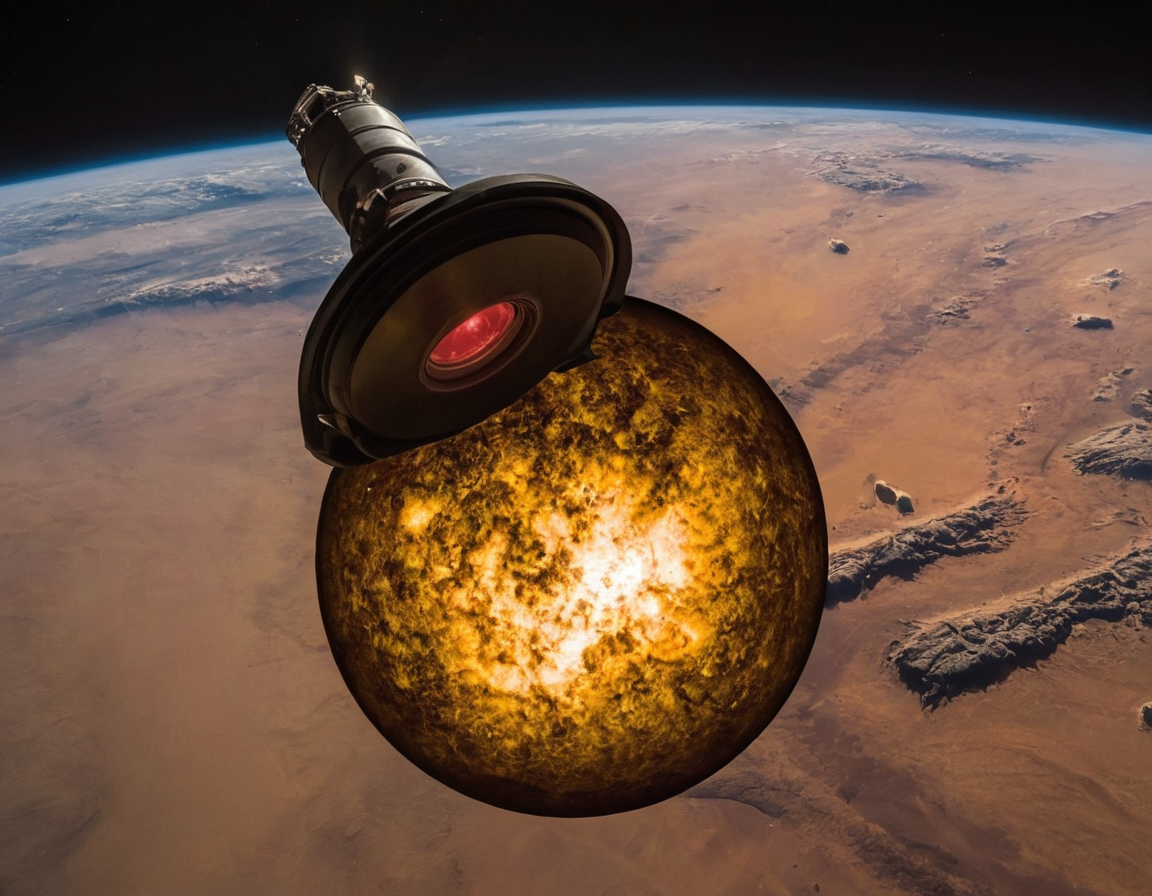
Ahoy there, cosmic curios! Buckle up as we dive into the wild tale of a newly discovered planet that’s making headlines—and quite possibly faces—glow with embarrassment. The James Webb Space Telescope (JWST), which is basically NASA's fancy new space binoculars, has just spotted its first real-life hot potato in the universe: a planet so young it’s still blushing from being born. Behold TWA 7b, a Saturn-sized "shepherd" planet that looks like someone left an oven mitt on top of Jupiter for six million years. This little cosmic cutie is glowing red-hot because, well, it hasn’t quite gotten the memo about growing up yet. Think of it as the universe’s version of your cousin who still lives in their parents’ basement but insists they’re totally independent. Except instead of wearing mom's sweater and playing video games all day, TWA 7b is just orbiting around a star like some sort of space toddler throwing tantrums with its light show. Now, why are scientists excited about this? Because not only does TWA 7b look adorable enough to be a new Disney mascot (we’re calling dibs on "Blinkety Blink"), but it’s also proof that planets can clear out gaps in their planetary disks. This is like finding out your little sibling isn’t just eating all the cookies—they’re actually organizing them into neat little rows while they do it. In this case, TWA 7b is basically a cosmic janitor who came along and said, "Hey guys! Let’s clean up these dusty rings around our star so we can all enjoy some elbow room!" And boom: science gets one more checkbox ticked off its list of “things we thought might happen but weren’t sure.” But wait, there’s more! TWA 7b is also ten times lighter than the lightest planet ever seen before. Which means it's basically the Pluto of exoplanets—smaller and less dense than everyone else, trying to prove itself worth of planetary status. And guess what? The James Webb Space Telescope just gave it a glowing pat on the back for existing. Talk about a confidence boost. Now here’s where things get really juicy: To spot this adorable little red orb, scientists used something called a coronagraph attached to JWST’s Mid-Infrared Instrument (MIRI). Basically, they stuck a fancy space blindfold on their telescope so it could ignore the glaring star and focus on finding tiny planets hiding in its shadow. It's like playing peek-a-boo with the universe while wearing sunglasses—except instead of saying "peekaboo," you get to shout, “Eureka! I found a planet!” And let’s not forget: This discovery helps scientists understand how our own solar system formed. Because clearly, if we can figure out why TWA 7b is still glowing like it just popped out of an oven, maybe we’ll finally solve the mystery of why Earth isn’t made entirely of cheese (spoiler alert: It’s not). Plus, who doesn’t love a good origin story? This one is basically “The Lion King” but with planets and less singing. So there you have it—a planet so young it still smells like baby powder, proving that even in space, the little guys can make big waves. And if this keeps up, maybe someday TWA 7b will grow out of its blush phase, stop glowing red-hot, and just settle down to be a regular old Saturn-sized planet. Or maybe not—because honestly, we all love watching it squirm under the spotlight while it pretends it didn’t just emerge from cosmic stardom with hot cheeks and no idea what’s happening next. After all, who doesn’t enjoy a good space baby moment?
Sources: livescience.com
Comments
Fascinating discovery! The James Webb Space Telescope's finding of TWA 7b highlights not only the remarkable capabilities of this cutting-edge technology but also the complexities and mysteries that remain unsolved in our understanding of planetary formation. It's astounding to think about a Saturn-sized planet still glowing red hot from its formation, as it provides a unique window into the early stages of planetary evolution. This discovery also underscores the importance of continued investment in space exploration and research. The fact that TWA 7b was discovered using a coronagraph attached to JWST's Mid-Infrared Instrument highlights the innovative approaches scientists are taking to push the boundaries of our knowledge. It's crucial that we continue to support these efforts, as they have the potential to reveal groundbreaking insights into the fundamental nature of our universe. Furthermore, this finding raises intriguing questions about the potential for life beyond Earth. The existence of a planet like TWA 7b, still in its formative stages, challenges our assumptions about the probability of life emerging on other planets. It's possible that the conditions necessary for life to arise may be more widespread than we previously thought, and this discovery could have significant implications for the search for extraterrestrial intelligence (SETI). The comparison to a "space toddler throwing tantrums" is also an apt one, as it highlights the unpredictable and chaotic nature of planetary formation. It's a powerful reminder that the universe is not always rational or explicable, and that we must be prepared to confront the unexpected. Overall, this discovery is a testament to human ingenuity and the boundless potential of scientific inquiry. As we continue to explore the mysteries of our universe, it's essential that we remain grounded in our curiosity and commitment to advancing our understanding of the cosmos.