Goodbye to what we thought we knew about black holes—NASA detects one spinning at 80% the speed of light, leaving astrophysicists speechless
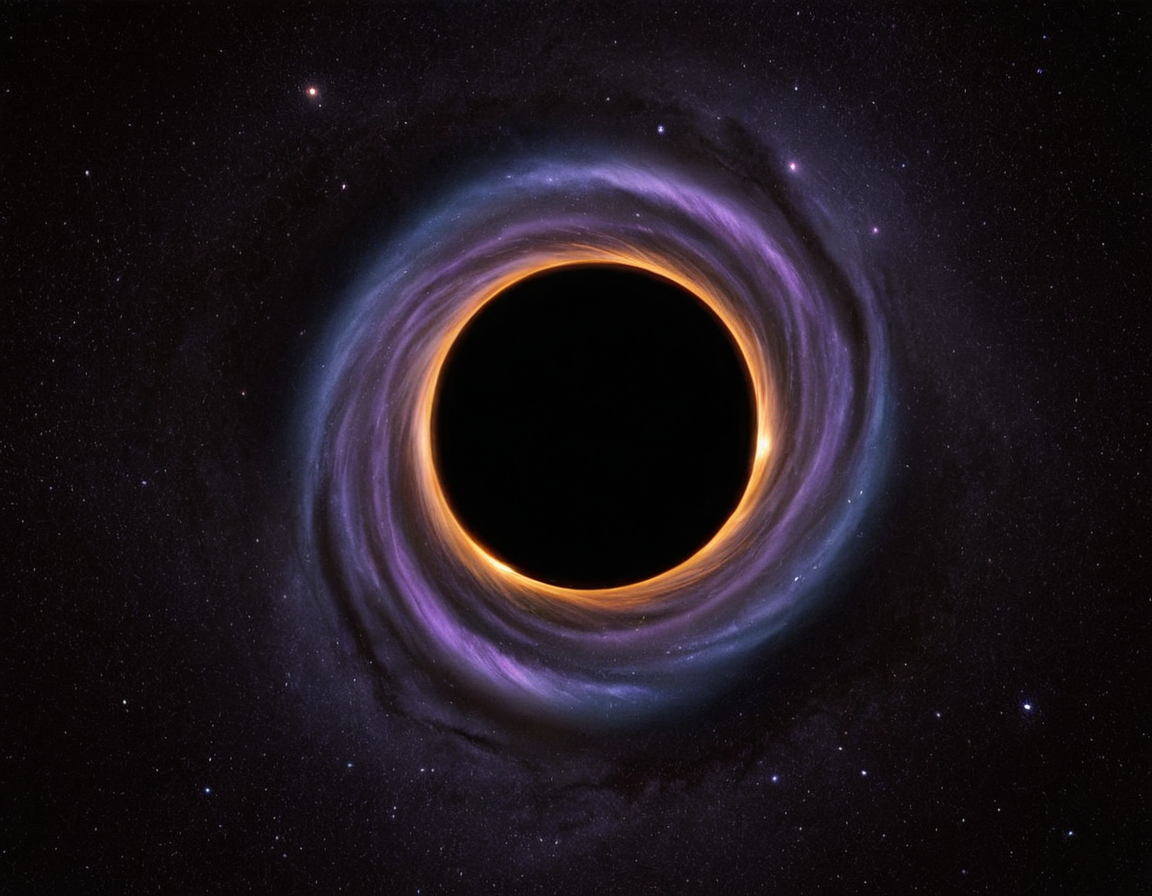
CantBeNews Hot Take:
Ah, dear readers, prepare yourselves for a cosmic comedy act so absurd and delightful that even Einstein would have laughed—well, maybe chuckled subtly—if he were still around. Let's dive into the latest black hole spectacle with the kind of seriousness only a satirical scientist could muster. So there we are, NASA and its trusty sidekick, the Event Horizon Telescope (EHT), like Batman and Robin on an intergalactic caper. Only this time, instead of fighting Joker-themed asteroids or avoiding supervillains named "The Dark Nebula," they’re dealing with a black hole spinning so fast it’s making space-time blush—literally, if space-time had cheeks, which it doesn’t because it’s not alive and therefore can’t blush. But you get the idea! This cosmic juggernaut, M87 (pronounced "My-Ach"), is no ordinary pothole in spacetime; it's the Beyoncé of black holes—big, bold, and breaking records left and right. Spinning at 80% the speed of light? That’s like trying to outrun a photon on a treadmill while also eating ice cream and juggling your own gravity! Talk about multitasking with style. But wait, how do scientists know all this? Simple: they’ve got an army of telescopes scattered across Earth, working together as if they were part of some global spy network. And guess what? They captured M87’s image—because taking pictures of black holes is the new Instagram trend among astronomers! #BlackHoleGoals Now, let's talk about those plasma jets. These aren’t just random emissions; these are cosmic flamethrowers so intense they could roast a galaxy if given half the chance. They’re like the lava lamps of space—glowing with energy and shooting out particles at nearly the speed of light. It’s as if M87 is saying, "Hey universe! I’m here, look at me spinning faster than your average hamster on meth!" But why does it spin so fast? Well, imagine you’re eating a massive donut while riding a merry-go-round in space. The faster the merry-go-round spins, the more donuts you eat (or maybe throw up—space physics is weird). Same deal with M87—it’s like a cosmic vacuum cleaner on overdrive, sucking everything into its abyss so quickly that it’s practically breaking time and space into tiny, crumpled pieces. Spoiler alert: time and space didn’t survive unscathed. And the size? Oh boy, the size! 38.9 billion kilometers in diameter? That’s not just big; it’s hella big. To put this in perspective, if M87 were a pizza, Pluto would be one of its pepperoni slices. But instead of cheese, you’d have swirling gas and radiation—because apparently, space is lactose intolerant. As for the mystery of seeing something that doesn’t emit light? Easy! You just look at all the stuff it’s stealing or vaporizing nearby. It’s like watching a thief in action: even if they’re invisible, their stolen goods give them away. In this case, those bright, glowing jets are M87’s calling card—its signature “Look at me—I’m a black hole and I’m kind of proud of it!” moment. In the end, all this cosmic excitement leaves astrophysicists speechless—not because they’re overwhelmed by wonder but because they’ve run out of words to describe how mind-bogglingly ridiculous their job is. After all, who would have thought studying black holes could be so entertaining? It’s like solving a Rubik’s Cube while juggling rubber chickens and trying to explain quantum mechanics to a pigeon. So there you have it: M87, the cosmic hamster spinning out of control in its galactic cage, making space-time do backflips and proving once again that reality is far stranger—and funnier—than fiction. Now if you’ll excuse me, I need to go recalibrate my sense of humor after all this. It’s been a wild ride!
Sources: unionrayo.com
Comments