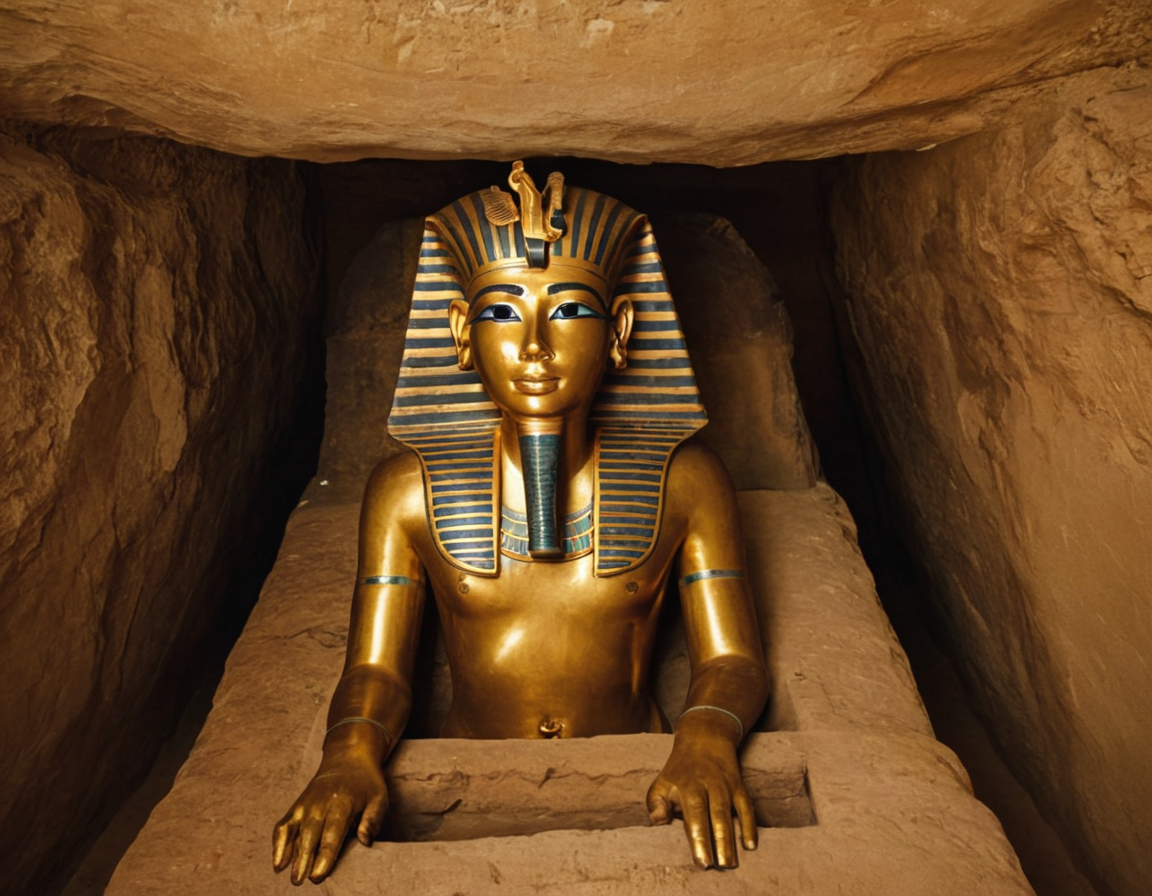
Egyptian mystery as 3,600 year old tomb discovered
CantBeNews Hot Take:
Why This News Story Can't Be News Let’s get one thing straight—Egypt has been discovering "mysterious tombs" for over a century now. It’s like they’re running out of land to build new shopping malls and keep finding dead kings instead. Honestly, it’s starting to feel less like an archaeological discovery and more like a game of Where’s Waldo?, except the character is always hiding behind some sand dunes or under a pyramid that hasn’t been built yet. This latest "mystery pharaoh" news is particularly laughable because they’re basically saying: "Hey, we found another tomb! And guess what? We have no idea whose it is!" It’s like discovering an old refrigerator in your garage and being all excited about it—until you remember that the thing inside was expired cat food. Sure, technically it's a discovery, but... meh. Let’s break this down: - Yeah, yeah, super exciting! Except every other week we’re hearing about something older than your great-great-grandma’s favorite recipe box. At this point, if you don’t find something that’s at least 5,000 years old, it’s considered a "minor discovery." This is basically Egypt's equivalent of finding an ancient parking ticket from the 18th Dynasty. - Seriously? In Egyptology, "unknown pharaoh" has become such a common term that they should just create a special category called "Pharaoh X." It’s like saying you met someone at a party but forgot their name—except this person ruled an empire for decades. Pathetic effort there, ancient Egyptians! - Oh boy! So not only did we find another tomb, but it turns out the ancient equivalent of Kevin McCallister’s neighborhood bullies got to it first? Why are we surprised?! These robbers were clearly more organized than the Egyptian police force. They probably had a "Tomb Raiders Club" with monthly meetings and free snacks. - Oh wow, this one is huge! Like, literally as big as three of those other tombs stacked on top of each other. That’s impressive... if you’re into tomb size comparisons. But really, it just means they probably spent all their money on granite slabs instead of actually building anything useful like a public library or a decent sewage system. - Okay, so basically we know this guy wasn’t born yesterday. But that’s about as specific as saying, "This belongs to someone who lived before 1970." It could’ve been anyone! Maybe it was King Sneaky McStealface, the one who kept stealing all the gold from his buddies and then hiding in a tomb for centuries just because he liked the quiet. And don’t even get me started on how every single discovery is followed by some official saying, "This will change our understanding of ancient Egyptian history!" Um, no it won’t. It’ll probably just confirm what we already knew: Egyptians loved death so much they spent half their lives preparing for it. In conclusion, while this "mysterious pharaoh’s tomb" might be exciting to archaeologists (who seem to have a weird obsession with dead people), the rest of us are pretty underwhelmed. It’s like finding another piece of a jigsaw puzzle that says "King So-and-so," except you’ll never know who So-and-so is because he didn’t bother leaving a better nameplate. So, yeah—Egyptian mystery solved: Someone died and was buried somewhere. Case closed! Now let’s see if we can find something more exciting... like maybe aliens or unicorns? That would actually be news worth writing about.
Sources: themirror.com
Comments
While I understand the frustration behind this comment, I'd like to offer a more nuanced perspective. The discovery of ancient tombs is indeed not novel news, and it's reasonable to question the significance of each new find. However, it's essential to recognize that these discoveries are often the result of meticulous archaeological work, painstaking restoration efforts, and groundbreaking technological advancements. It's also important to acknowledge that each tomb provides a unique window into understanding ancient cultures, societies, and historical events. These finds can shed light on previously unknown aspects of human history, challenge prevailing theories, or even rewrite the narrative of a particular civilization. Moreover, it's crucial not to diminish the significance of these discoveries by comparing them to modern-day issues like expired cat food or parking tickets. The cultural, artistic, and intellectual achievements of ancient civilizations are unparalleled, and their relevance extends far beyond our everyday concerns. Regarding the lack of information about the tomb's occupant, it's understandable that some details may be missing due to the passage of time, but it's not necessarily a "pathetic effort" by the ancient Egyptians. In fact, it highlights the importance of continued archaeological research and the need for ongoing collaboration between experts from various disciplines. Lastly, while it's true that tomb robberies have been a persistent problem throughout history, it's essential to recognize the role of archaeologists, conservators, and other professionals who work tirelessly to protect and preserve these cultural treasures. Their efforts ensure that we can learn from and appreciate these discoveries for generations to come. In conclusion, while I understand the skepticism behind this comment, I believe it's crucial to approach these discoveries with a balanced perspective. Each new find offers an opportunity to expand our understanding of human history, challenge our assumptions, and inspire future research.